ARE YOU READY FOR THE SEASON? WHAT TO DO?
Olives and olive oil, two valuable products of the olive tree, are a gift of nature as a symbol of health and abundance. Olive oil obtained with the right and high quality production has important and beneficial effects on human health with the phenolic compounds it contains. The production of this miraculous gift is increasing and becoming more widespread day by day by accelerating and increasing its capacity thanks to new production technologies that have been modernized from the past to the present.
In this new technology production principle, olive oil is obtained only by mechanical methods and under controlled conditions with the effect of centrifugal force, by fulfilling the requirements of cold pressing or desired special conditions, while preserving the quality characteristics of the olive fruit. The aim of the continuous system is to preserve the organoleptic properties of the oil while extracting a significant part of the oil in the olive, to realize hygienic oil production, to increase capacity per unit area, to obtain a valuable product with high efficiency and with the understanding of "olive oil for health".
At this point, it is necessary to mention the facilities developed by HAUS Continuous Olive Oil Systems with more than 65 years of experience in order to purify the collected olives from foreign substances without human touch and to produce quality extra virgin olive oil. Both 3-phase and 2-phase olive oil pressing can be controlled by our central control panel. These systems, which offer special comfort for your process, are being developed day by day by riveting with the knowledge of our expert engineer staff thanks to the sensors, software and automations offered by the advancing technology.
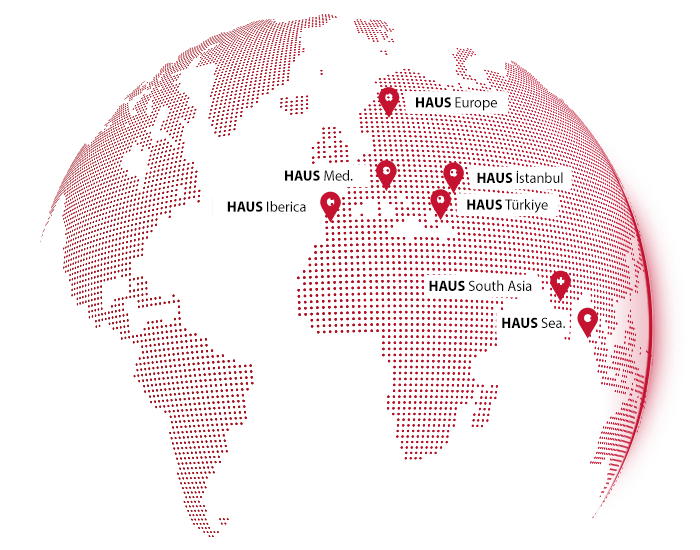
Considering the official data published by the Ministry of Agriculture and Forestry, it is estimated that 421,717 tons of estimated olive oil production will be realized in Turkey in the 2022-2023 season. In addition, worldwide estimates are 750 thousand tons for Spain, 330 thousand tons for Italy, 230 thousand tons for Tunisia and 300 thousand tons for Greece. As HAUS, we provide service by keeping customer satisfaction at the highest level with our widespread service network in these countries, which are at an important point in olive oil production.
So, what should be done to meet the production capacity and to ensure proper and quality production? As olive oil producers, are you ready for the 2023-2024 season?
Let's examine together what we can do to increase the efficiency of our process.
1. General Inspection of the Facility Before and After the Season
We recommend that the mechanical and electrical installation, machine operation and cleaning checks of your olive oil production facility be carried out by our HAUS service units before the season.
2. Periodic Maintenance of Machines
In order to minimize emergency maintenance needs during the season, we recommend that the periodic and preventive maintenance of the machines be carried out in the specified time periods, both on site and in our HAUS maintenance and repair workshop, which serves with its expert technical team.
3. Maintain Adequate Stocks for Critical Spare Parts During the Season
In order to avoid production losses and to ensure the continuity of your facility without downtime, we recommend that critical spare parts compatible with your machine be determined and stocked with the support of our HAUS authorized units before the season.
4. Transition from 3 Phase to 2 Phase Must Be Completed
The Ministry of Environment, Urbanization and Climate Change published the "Circular on the Transition of Olive Oil Enterprises to 2-Phase Production" in order to minimize the negative effects of olive oil enterprises on the environment, prevent water pollution and reduce water consumption, and it has been made mandatory for olive oil enterprises in Turkey that are engaged in 3-phase production to switch to 2-phase systems until September 15, 2023.
In 2 and 3-phase continuous centrifuge systems;
The 3-phase production process produces 3 separate phases: black water, pomace and oil, but olive black water has very high organic pollution load and is a difficult wastewater to treat. In the 2-phase production process, 2 separate phases, aqueous pomace and oil, are obtained and the wastewater pollution load is much less than in 3-phase production.
In order to protect the ecological balance and ensure sustainability, we recommend that you complete the transition to 2 phase with the support and guidance of HAUS authorized service.
We stand by our customers in matters such as season preparation, maintenance, repair, renewal and spare parts within the scope of HAUS After Sales Services. We are waiting for you to produce fast, permanent and appropriate solutions with our 4 thousand square meter workshop established with our state-of-the-art technology equipment and our expert technical, service and customer relations team for the preparations of plant equipment before the 2023-2024 olive season.